


The humanitarian situation in Lebanon continues to deteriorate despite the ceasefire announced last month with Israel, the United Nations said on Monday.
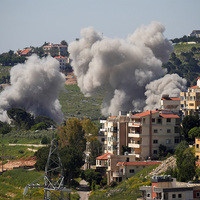
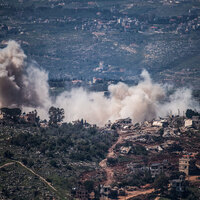
The fragile ceasefire in Lebanon hasnt prevented ongoing killing and displacement, with villages in the south of the country rendered completely unrecognizable after Israeli strikes, aid teams reported on Friday.
An Israeli airstrike overnight on the southern suburbs of the Lebanese capital Beirut has sparked a new wave of displacement among civilians already impacted by months of conflict, the United Nations said on Thursday.
More than 100 strikes were reported in the past 24 hours alone, while 87 people were killed over the weekend, UN Deputy Spokesperson Farhan Haq told journalists in New York.
Separately, UN Emergency Relief Coordinator Tom Fletcher stressed that the violence must end.
Genuine ceasefire needed
Over 100 strikes on Lebanon in 24 hours. Civilians killed. Families displaced, Mr. Fletcher tweeted.
We are doing everything to get support to those who need it. But what people need most is a genuine ceasefire.
Healthcare under fire
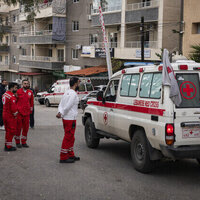
Mr. Haq said Lebanese authorities reported on Monday that two paramedics affiliated with the Islamic Health Committee were killed, and several others wounded, in airstrikes in two towns in the south.
Moreover, the World Health Organization (WHO) has recorded 158 attacks on healthcare, resulting in 108 deaths and 249 injuries, since the start of the escalation between Hezbollah militants and Israeli forces on 2 March.
Attacks on humanitarian and medical personnel are unacceptable and further undermine an overstretched health system and access to emergency healthcare for civilians, he said.
Three hospitals and 41 primary healthcarecentresremainclosed, he added, while several othersoperateonly partially. In southern governorates, six hospitals have yet to resume maternity services that were suspended during the escalation.
Civilians on the move
Renewed displacement orders also were issued over the weekend for multiple towns and villages in southern Lebanon and Nabatieh governorate.
UN aid partners noted that displaced people, including pregnant women and other vulnerable groups, often face limited access to adequate and diverse food, thus increasing health risks.
Despite these challenges, humanitarian partners continue to deliver critical assistance and services inclose coordination with the Government, Mr. Haq said.
So far, they have supported more than 585 hospital admissions, administered over 18,000 vaccine doses through primary healthcare centres, provided more than 4,300 prenatal care consultations, and distributed more than 8.4 million meals.
WFP/Mustapha Ghabris
Displaced families at a shelter in Beirut, Lebanon. (file)
Rising needs, funding shortfall
He warned, however, that humanitarian needs continue to outpace resources, and a $308 million appeal covering the period from March to May is just over 40 per cent funded.
In related developments, the UN Interim Force in Lebanon (UNIFIL) has continued to record extensive military activity across its area of operations.
Since Friday, UNIFIL peacekeepers have observedmore than 1,296 trajectories of projectiles attributed to Israeli forces, and 64 attributed to Hezbollah.
Strikes and other violence in Gaza
In more news from the region:
Humanitarians in Gaza reported multiple incidents of airstrikes this weekend, along with shelling, navyfireand gunshots hitting residential areas, whichreportedly resultedin casualties.
Meanwhile, UN partners working on water and sanitation said raw sewage has floodedneighbourhoodsin Khan Younis, following power failures linked to the shortage of lubricating oil for pumping station generators.
They stressed that essential suppliesincluding engine oil and spare partsmust be allowed into Gaza urgently.
WHO/Hanan Balkhy
In Gaza displaced families are living in overcrowded tents and makeshift shelters, surrounded by waste and debris, with limited access to safe water and sanitation services.
Diplomats visit the West Bank
Turning to the West Bank, where the top UN humanitarian official in the occupied Palestinian territory, Ramiz Alakbarov, led diplomats from 11 countries on a field visit to witness the impact of demolitions, displacement, water access restrictions and settler violence.
Thedelegationmet affected Palestinians in two communities, EinelBeidaand AlHadidiya, in the northern Jordan Valley.
They also stopped at Hammamat al Maleh, which is among 45 communities that have been displaced in full since 2023 due to settler violence and access restrictions.
Solidarity, support and accountability
The delegationvisitedhomesthat wereabandonedwhen people were forcibly displaced, a demolished school thathad been built withdonorfunding, and water springs that have been taken over by Israeli settlers, said Mr. Haq.
They heard testimonies from Palestinian herders facing repeated attacks,demolitionsand restrictions on access to grazing land.
Mr. Alakbarov called for solidarity and partnership to support people whose lives, way of living and livelihoods are at risk.
He also stressed the need for accountability for violence,demolitionsand illegal use of natural resources.