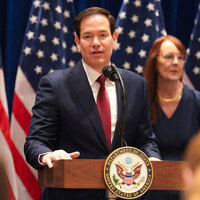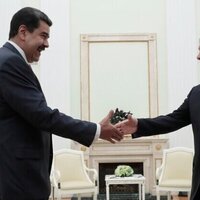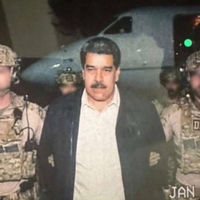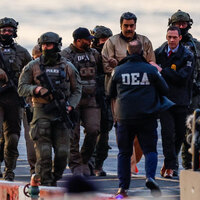


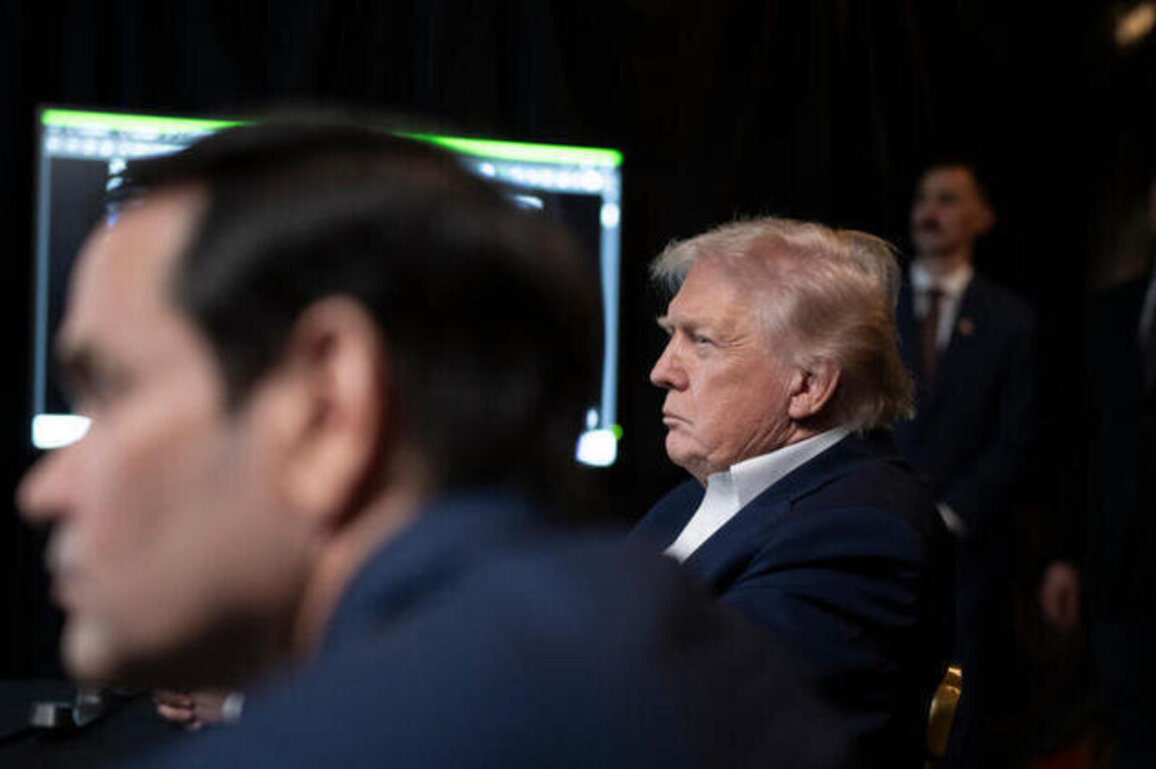
A day after the audacious and successful US military operation that removed Nicolas Maduro in Venezuela,Secretary of State Marco Rubioindicated in aninterviewthat aired Sunday that Cuba might be next.
Asked directly whether Cuba was the administration's "next target", Rubiocalled the Cuban government "a huge problem".
"So is that a yes?" the interviewer pressed. "I think they're in a lot of trouble, yes," Rubio replied.
That same day, Trump renewed his calls for a US takeover of the Danish territory of Greenland, citing US security interests, and threatened military action in Colombia for its role in cocaine trafficking.
With such thinly veiled threats, Trump and co. are rattling friends and foes alike, spurring observers around the world to pose a pointed question: Who might be next?
Greenland
Greenland's melting Arctic ice is creating new, potentially lucrative shipping routes while its land mass is mineral-rich. Its strategic location has also been identified as a potentialAchilles' heel for NATO. Russia, China, the United States and Europe have alreadytaken stepsto bolster their military presence in the region.
Trump, for his part,tried to buythe semi-autonomous island from Denmark in 2019 during his first term.
Its so strategic right now. Greenland is covered with Russian and Chinese ships all over the place," Trumptold reportersas he flew back to Washington from Florida on Sunday.
"We need Greenland from the standpoint of national security, and Denmark is not going to be able to do it.
Read moreWar in Ukraine threatens geopolitical balance in the Arctic
The operation in Caracas and Trumps comments heightened concern in Copenhagen, with Prime Minister Mette Frederiksenstating unequivocallythat Trump has "no right to annex" the territory.
She also reminded Trump that Denmark already provides the United States, a fellow member of NATO, broad access to Greenland through existing security agreements.
I would therefore strongly urge the US to stop threatening a historically close ally and another country and people who have made it very clear that they are not for sale, Frederiksen said.
Denmark signed onto a European Union statement on Sunday underscoring that the right of the Venezuelan people to determine their future must be respected even as Trump vowed the US would run Venezuela and pressed the country's acting president, former vice president Delcy Rodriguez,to toe the US line.
Trump mocked Danish efforts to boost Greenlands national security posture on Sunday by saying the Danes had added one more dog sled to their arsenal.
Greenlanders and Danes were further rankled by a social media post from a former Trump administration official turned right-wing podcaster. Katie Miller who is married to Trump deputy chief of staff Stephen Miller, the anti-immigrant campaigner and architect of many of Trump's controversial deportation policies appeared to threaten Denmark, a US ally. The post showed an illustrated map of Greenland in the colors of the Stars and Stripes accompanied by the caption: SOON."
In a post responding to Miller,Ambassador Jesper Moller Sorensen, Denmark's chief envoy to Washington, called for the US to respect national borders. And yes, we expect full respect for the territorial integrity of the Kingdom of Denmark, he wrote.
During his presidential transition and in the early months of his return to the White House, Trump called for the US to assert control over Greenland and has pointedlynot ruled outmilitary force to take control of the Arctic island.
The issue had largely drifted out of the headlines in recent months. But Trump then put the spotlight back on Greenland less than two weeks ago when he said he would appoint Republican Governor Jeff Landry as special envoy to Greenland.The Louisiana governor responded that in his volunteer position he would help Trump make Greenland a part of the US.
Cuba
The Trump administration'sNational Security Strategy, published last month, cited restoring American preeminence in the Western Hemisphere as a central goal, an aim underscored by the Venezuelan adventure.
Trump on Saturday cited the 19th-centuryMonroe Doctrine, which called on world powers notably European colonists to respect American hegemony in the region.
He also cited the doctrine's Roosevelt Corollary the justification used to support Panamas secession from Colombia, which helped secure the Panama Canal Zone for the US as he made his case for a more assertive approach to the Western Hemisphere.
Trump even quipped that James Monroe's 1823 policy declaration could be renamed the Don-roe Doctrine.
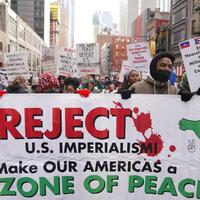
Concern is thus simmering in Cuba, one of Venezuelas most important allies and trading partners, fueled by Rubio's hints that the Cuban government might be the next to draw Washington's attention.
Rubio underscored the link between the two countries in his Sunday appearance on NBC's Meet the Press, saying Cuban officials were with Maduro ahead of his capture.
It was Cubans that guarded Maduro, Rubio said. He was not guarded by Venezuelan bodyguards. He had Cuban bodyguards. The secretary of state added that Cuban bodyguards were also in charge of internal intelligence in Maduros government, including who spies on who inside, to make sure there are no traitors.
Read moreCuba denounces 'state terrorism' against Venezuela as US warns Havana could be next
The Cuban government said in a statement read on state television on Sunday evening that 32 officers were killed in the US military operation that toppled Maduro.
Trump said the Cuban economy, battered by years of a US embargo, is in tatters and will slide further now with the ouster of Maduro, who provided the Caribbean island with subsidized oil.It's going down, Trump said of Cuba's economy. It's going down for the count.
US-Cuba relations have been hostile since the 1959 Cuban revolution.
Colombia
As he made his way back to Washington on Sunday evening, Trump also put Venezuela's neighbour Colombia and its leftist president, Gustavo Petro, on notice.
In a back-and-forth with reporters, Trump said Colombia is run by a sick man who likes making cocaine and selling it to the United States.
The administration imposed sanctions in October on Petro, his family and a member of his government over accusations of involvement in the global drug trafficking.
Read moreColombia's president defiant after US sanctions over drug trafficking
Trump began his pressure campaign on Maduro by ordering dozens of lethal strikes on alleged drug-smuggling boats travelling from Venezuela in the Caribbean. He eventually expanded the operations to target suspected vessels in the eastern Pacific originating from Colombia.
In September the United States added Colombia, the top recipient of US assistance in the region, to a list of nations failing to cooperate in the drug war for the first time in almost 30 years. The designation led to a slashing of assistance to the country.
Hes not going to be doing it for very long, Trump said of Petro on Sunday. He has cocaine mills and cocaine factories. Hes not going to be doing it.
Asked whether he might order the US to conduct an operation against Colombia, Trump replied vaguely: It sounds good to me.
Iran
Iran has long been allied to Venezuela, using Caracas to bypass US sanctions and trading oil for gold. The "ghost fleets" operating off the coast of Venezuela are suspected of carrying sanctioned Russian and Iranian oil to global markets, circumventing sanctions.
Lebanon's Iran-backed Hezbollah militants also haveeconomic ties toVenezuela, raising money through narcotics. According to theAtlantic Councilthink tank, the Maduro regime and Hezbollah have exploited the status quo "to turn Venezuela into a central hub for the convergence of transnational organized crime and international terrorism".
Leaders in Tehran are likely to see the fall of Maduro as an indication that Trump is likely to pursue regime change if he deems it's in the US interest, and will not just stop at curtailing Iran's nuclear and ballistic missile programs, noted Raz Zimmt, head of the Iran and Shiite Axis research program at the Institute for National Security Studies in Tel Aviv, incomments to the Times of Israel.
Moreover, events in Venezuela could indicate that Trump would not oppose Israeli efforts at regime change in Tehran despite his previous dissembling. Hosting Israeli Prime Minister Benjamin Netanyahu at the White House last week, Trump dismissed the idea,telling reporters:Im not going to talk about an overthrow of a regime.
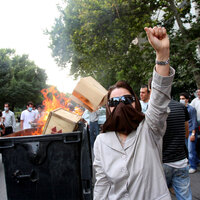
But amid reports of widespread Iranian protests just a few days later, Trump returned to more bellicose rhetoric.
If Iran shots [sic] and violently kills peaceful protesters, which is their custom, the United States of America will come to their rescue," hepostedon Truth Social in the wee hours of January 2. We are locked and loaded and ready to go, he said before adding his customary sign-off:Thank you for your attention to this matter!
(FRANCE 24 with AP)
Originally published on France24